Wednesday, July 28, 2010

Friday, July 16, 2010
Ishiyama Temple
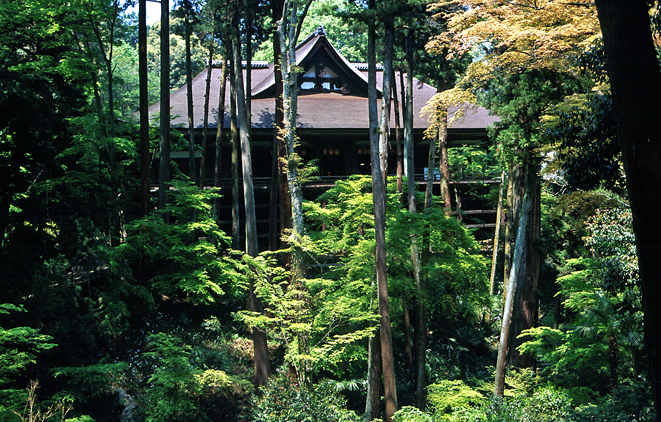
Ishiyama Temple is in the city of Otsu, the capital of Shiga Prefecture. Built in 792, it contains several cultural assets, including the two guardian statues said to have been sculpted by the famous sculptors Tankei and Unkei. Lady Murasaki Shikibu was said to have begun writing the Tale of Genji, the world's first novel, in 1004 at this temple. The temple thus holds significant value to Japanese (and world) literature.
Itsukushima Shrine

Itsukushima, also known as Miyajima (Shrine Island), is an island off the coast of Hiroshima. It is best known for the Itsukushima Shrine, a UNESCO World Heritage Site. It is believed to have been first built in the 6th Century, and its current form built by the samurai Taira no Kiyomori. The shrine is dedicated to the daughters of Susano-o, the Japanese god of seas and storms. The island is considered holy, and historically, commoners were not allowed to set foot on the island. To this day, births and deaths in the shrine, as well as burials on the island, are forbidden to keep the purity of the shrine. The shrine is known for its torii gate, which is in the middle of the water and appears to be floating at high tide. The view of this torii gate was declared by the philosopher Hayashi Razan to be one of the Three Views of Japan.
Nanzen-ji
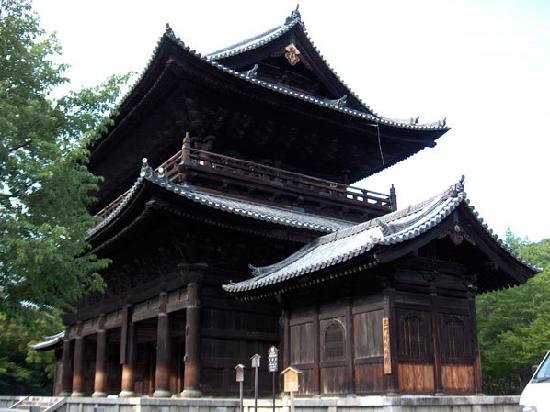
Nanzen-ji is a Zen temple founded in 1291 by Emperor Kameyama, initially as a retirement villa, similar to Kinkaku-ji and Ginkaku-ji. By his request, it was converted to a Zen temple. When the Ashikaga Shogunate instated the Five Great Zen Temples of Kyoto, this temple was not included among them, but rather stood in a class of its own, above both the temples in Kyoto and Kamakura, gaining the title of "First Temple of the Land." It played a role in supervising the other Zen temples, and demonstrates the role of religion in government in the Muromachi period.
Heian Shrine

This shrine was built relatively recently, in 1895, in Kyoto, to commemorate the 1,100th Anniversary of the establishment of the capital at Heian in 794. It is dedicated to the emperors Kammu and Komei, the emperors who moved the capital to Heian and then to Tokyo, thus being the first and last emperors who lived in Kyoto. It has one of the largest torii gates in Japan, and is built as a scaled replica of the Imperial Palace in Kyoto. One of Kyoto's most important festivals, the Festival of Ages, is held here.
Holy Resurrection Cathedral

Site: http://www.geocities.jp/ynicojp2/english/index.html
Engyo-ji
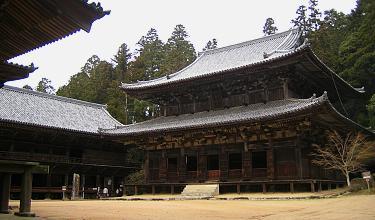
Engyo-ji is a temple in Himeji. It was founded by the Buddhist priest Shoku Shonin in 966, and is a pilgrimage site and one of the three greatest training centers of Tendai Buddhism. Many emperors, including Go-Shirakawa, Go-Daigo, and particularly Kazan, who donated 100 koku of rice (approximately 180,000 liters) to the temple, visited the temple and Shoku Shonin. This temple was also used as the set for The Last Samurai starring Tom Cruise.
Subscribe to:
Posts (Atom)